
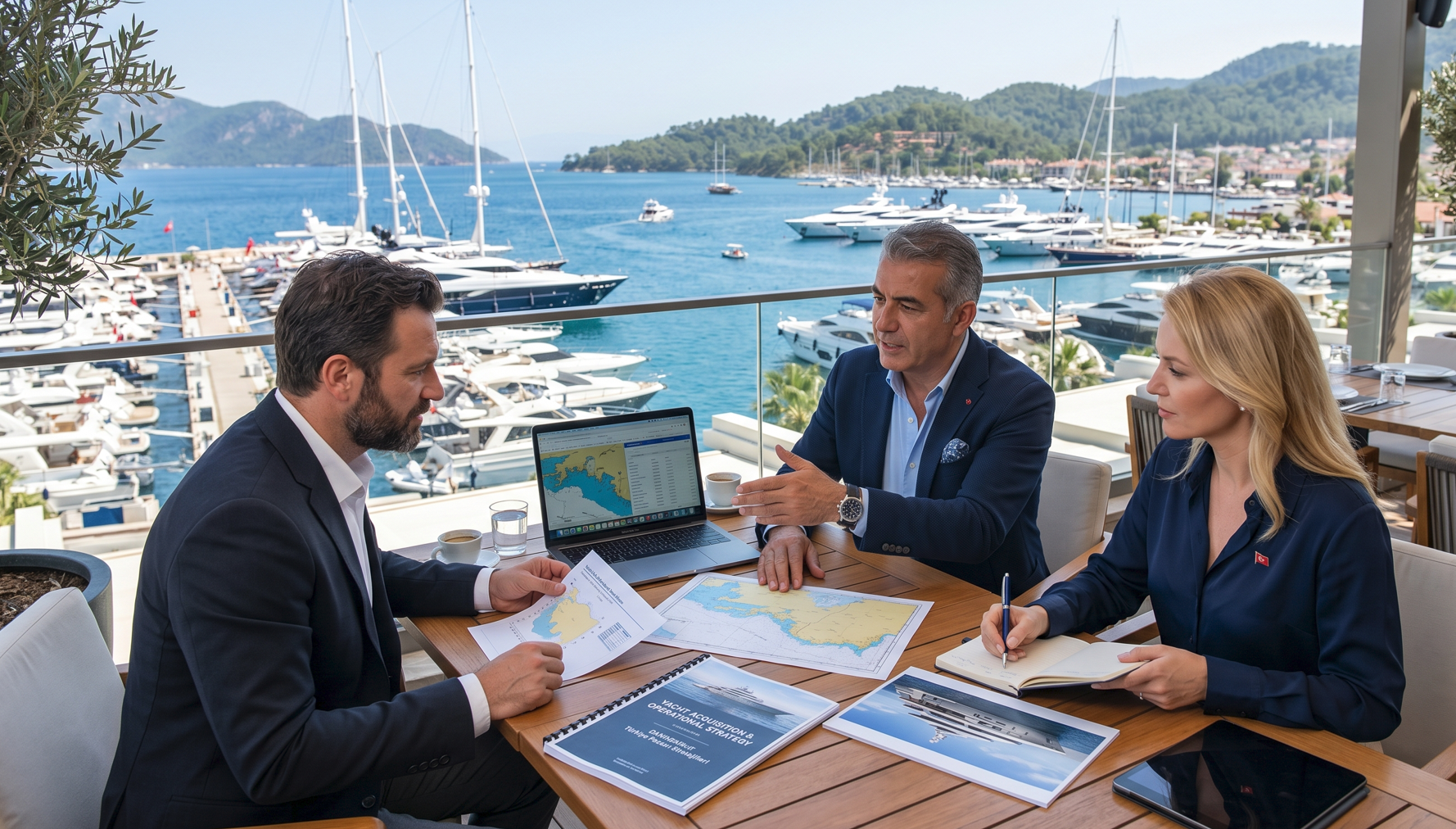
Chartering Legally in Turkish Waters
Commercial yacht charter in Turkey is regulated. Whether a yacht may take paying guests in Turkish waters — and under which licence — depends mainly on its flag, its ownership and its technical status. Chartering without the right permissions risks fines and the yacht being held in port.
Step One: Eligibility
Before any application, we look at the yacht’s situation and explain the realistic options. The key questions are:
- Which flag is the yacht registered under, and who owns it?
- Is the yacht already certified for commercial use?
- Where will charters start and end, and will guests embark in Turkey?
- How many guests and crew will be on board?
Charter rules in Turkey are set by several authorities and are updated from time to time. We give you an assessment based on the current rules for your specific yacht; we do not offer a one-size-fits-all answer.
Step Two: Applications and Documents
Where the yacht is eligible, we prepare and follow the process with the relevant authorities. Depending on the case this can include:
- applications for the required licence or operating certificate,
- registration and tonnage documents,
- technical and safety inspections,
- crew qualification checks for commercial operation,
- insurance appropriate for charter use — see insurance assistance.
Step Three: Ready to Operate
Once licensed, the yacht needs to stay compliant: valid certificates, correct crew, safety equipment and records. This links directly with safety management and charter management.
Typical Situations
- Turkish-flagged yacht owned in Turkey. Usually the most direct route to commercial charter in Turkish waters, subject to the yacht’s technical certification and crew.
- Foreign-flagged yacht. The options depend on the flag, the ownership and how the charters are organised. Some arrangements are possible, others are not, and the rules have changed over the years.
- Charters that start or end abroad. Trips that begin in Greece and enter Turkey, or the reverse, have their own requirements for clearance and guests.
- Gulets and traditional yachts. Many traditional wooden yachts on this coast are built and operated for charter, with their own certification path.
We explain which of these applies to your yacht, and what it would take to charter legally, before you commit to bookings or marketing.
Why Start Early
Applications, inspections and any technical changes the yacht needs take time, and the authorities are busiest just before the summer. Owners who want to charter in June should start the process in the winter. Starting early also leaves time to adjust safety equipment, crew certificates and insurance, which are often the slowest parts.
Our Role After Licensing
- tracking renewal dates for the licence and related certificates,
- keeping crew qualifications in line with commercial requirements,
- recording guests correctly for each charter,
- preparing the yacht for inspections during the season.
Frequently Asked Questions
What happens if a yacht charters without a licence?
Unlicensed charter can lead to fines, the yacht being held in port and problems with insurance cover. It is not worth the risk; we help owners find the legal route or explain honestly when there is none.
Can a foreign-flagged yacht charter in Turkey?
In some situations yes, in others no — it depends on the specific rules for the flag, ownership and itinerary. This is exactly what the eligibility assessment answers.
How long does licensing take?
It varies with the yacht and the type of licence. We give you a realistic timeline after the eligibility review; start well before the season.